









Private Hospitals
Table HKAH-SR. Antibiogram for common bacterial isolates, Hong Kong Adventist Hospital-Stubbs Road, 2025
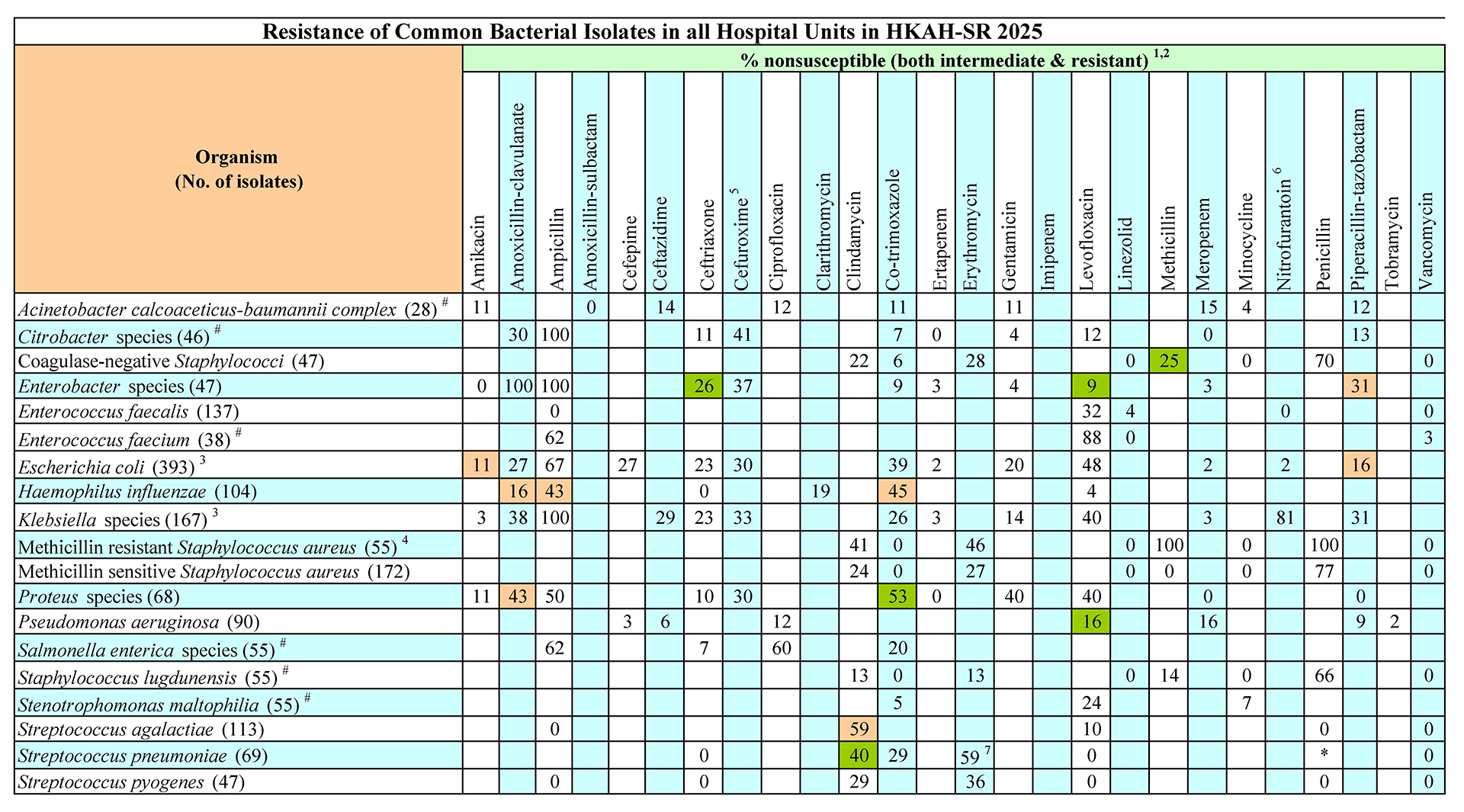
- Only the first isolates of a given species per patient per calendar year were included, irrespective of body site, antimicrobial susceptibility profile or other phenotypical characteristics.
- Results obtained from surveillance studies (CPE Screening and VRE Screening) were excluded.
- The overall prevalance of extended-spectrum beta-lactamases (ESBL) were 21% for Klebsiella species and 18% for E.coli.
- The percentage of community-associated Methicillin-resistant Staphylococcus aureus (CA-MRSA) among all Staphylococcus aureus tested is 4% (10/227).
- According to breakpoint for parenteral cefuroxime sodium.
- Results obtained from urine isolates only.
- In Streptococcus pneumoniae, resistance to azithromycin & clarithromycin can be predicted by testing erythromycin (CLSI M100).
* For Streptococcus pneumoniae, Penicillin (parenteral) MIC ≤ 0.06 µg/mL (61.3%), MIC 0.09-1 µg/mL (37.1%), MIC 1.5-2 µg/mL (1.6%), MIC 4 µg/mL (0%).
% Penicillin (parenteral) sensitive: non-meningitis breakpoint at MIC ≤ 2 µg/mL = 100% and meningitis breakpoint at MIC ≤ 0.06 µg/mL = 61.3%.
# The annual number of isolates is small. Data from 2024 and 2025 were combined in the calculation.
Indicate 10% or more reduction in resistant rate compared to 2022 figures.
 Previous Page